The best free budget apps for students 2026 — that’s exactly what this guide covers.
My flatmate at university was genuinely shocked when she checked her bank account in November. She’d started September with what felt like plenty of money. By week ten she was eating plain rice and trying to figure out where £800 had gone. Spoiler — it hadn’t gone anywhere dramatic. Coffee here, takeaway there, a few subscriptions she’d forgotten about, some nights out that added up faster than she expected.
She downloaded a budgeting app the following week. Not because she wanted to — she thought it would be depressing. But by December she actually had money left over. Same income. Same expenses basically. Just visibility over where it was going.
That’s genuinely all these apps do. They show you the thing you’re pretending not to know. And for most students, that’s enough to change behaviour on its own.
Here are the ones worth actually using in 2026.
1. YNAB — Free for Students, Best Overall
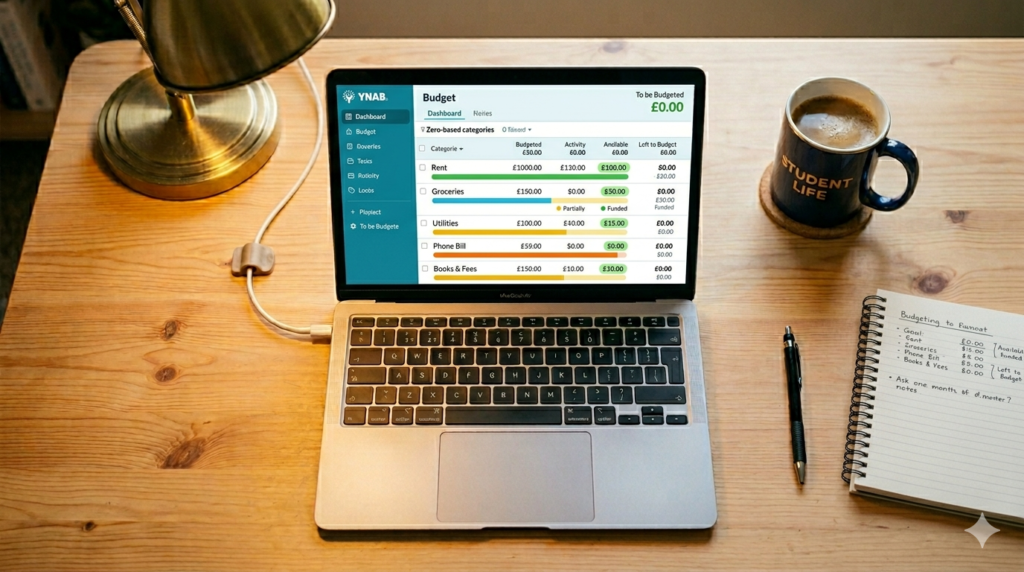
YNAB stands for You Need A Budget. Genuinely one of the best budget apps for students in 2026 — and completely free if you’re currently enrolled at a university or college.
The way it works is called zero-based budgeting. Every pound or dollar you have gets assigned a job before you spend it. Rent, groceries, transport, nights out — you decide in advance how much goes where. When a category runs out, it runs out. You can move money between categories if you need to, but you have to make a conscious decision to do it.
It sounds restrictive. In practice it’s the opposite — because you’ve already decided the nights out money is £60 this month, you spend it without guilt. No vague anxiety about whether you can afford something. You either have the budget or you don’t.
The free student access is the real deal — full features, no limitations, for as long as you’re enrolled. You just need to verify your student status. After graduation it costs money, but you’ve had a year or more of building solid financial habits by then.
Go to ynab.com/get-ynab-free to check if your institution qualifies.
2. Goodbudget — Best if You Don’t Want to Link Your Bank
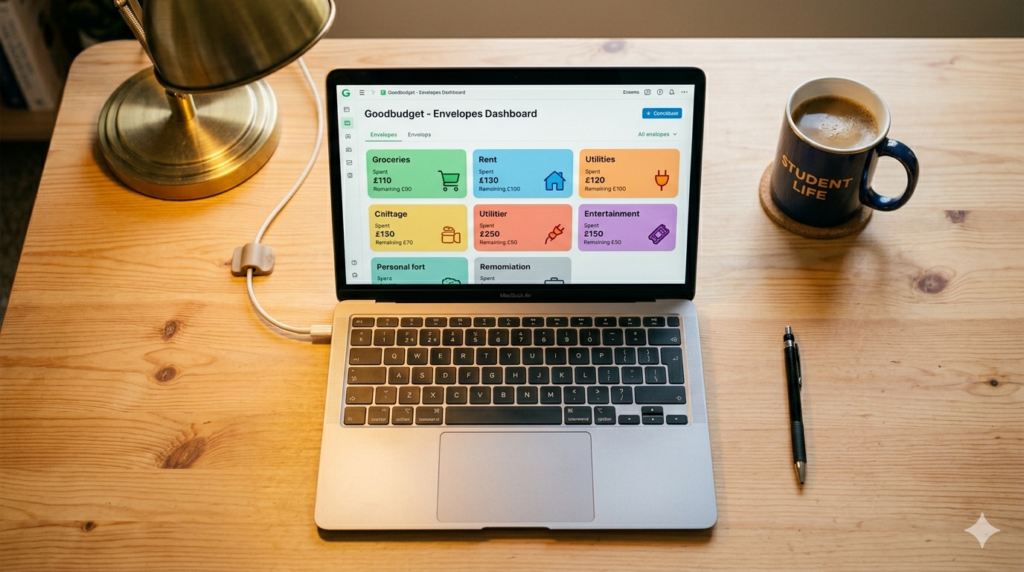
A lot of students — and honestly a lot of people in general — are uncomfortable connecting their bank account to a third-party app. Goodbudget gets that. It doesn’t require it.
You manually add your balances and income. Then you create digital envelopes — Rent, Groceries, Going Out, Books, Transport. Assign an amount to each one. Every time you spend, you log it against the right envelope. When it’s empty, that category is done for the month.
The free plan gives you 20 envelopes which is more than enough for most students. You can share access across two devices — useful if you want to budget with a flatmate or partner.
It’s more hands-on than some of the other apps on this list. You have to actually log things yourself rather than having transactions pull in automatically. Some people find that a pain. Others find that the act of manually logging a £4 coffee makes them think twice before buying the next one.
3. PocketGuard — Best for Seeing Exactly What’s Left to Spend
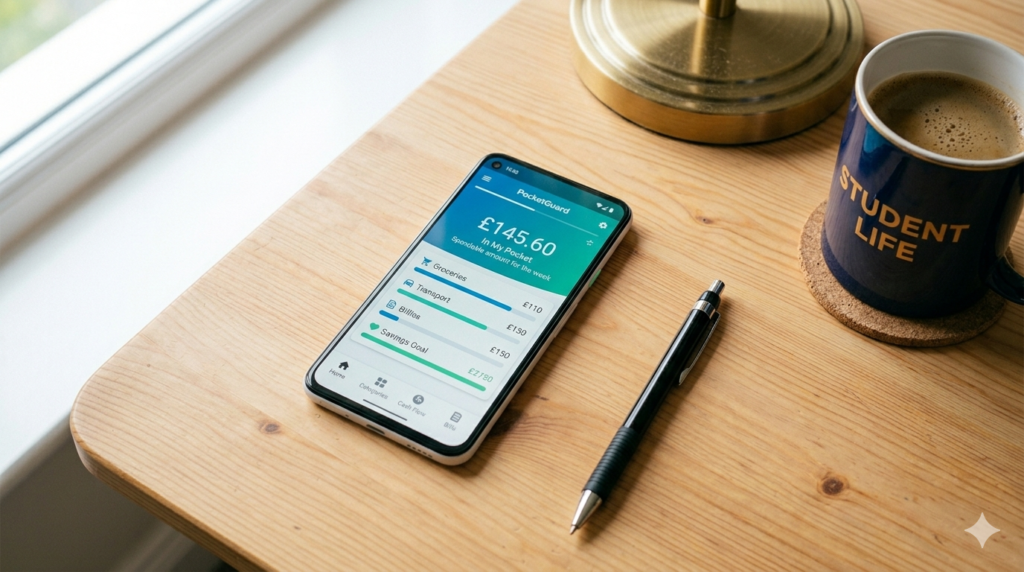
PocketGuard does one thing really well — it tells you exactly how much money you can safely spend right now, after accounting for your bills, savings goals, and upcoming expenses.
There’s a number on the screen called “In My Pocket.” That’s it. That’s your spendable money today. No complicated categories to manage, no envelope system to maintain. Just — you have this much. Spend less than this.
For students who find detailed budgeting overwhelming, this simplified view is genuinely useful. Connect your bank account, set up your regular expenses, and the app does the maths. You just check the number before you spend.
The free plan includes account linking — which is actually unusual since most apps save that for paid tiers. It also lets you categorise expenses and split transactions.
4. EveryDollar — Best for Zero-Based Budgeting Without the Learning Curve
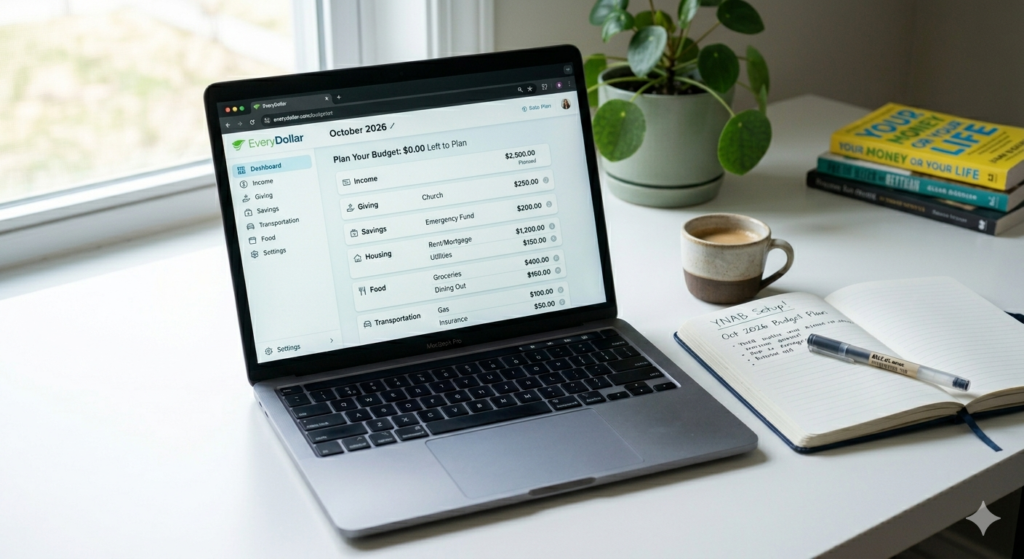
EveryDollar is similar to YNAB in philosophy — every dollar gets assigned somewhere — but it’s simpler to set up and easier to get started with.
The free version requires manual transaction entry, which is actually fine for students who don’t have a huge volume of transactions to track. You set up your budget at the start of the month, add income, allocate to categories, and then log spending as you go.
It relaunched in January 2026 with some genuinely useful additions — a margin finder that helps identify where you have breathing room, daily money lessons, and personalised plans. The free tier doesn’t include bank sync but everything else is there.
Good starting point if YNAB feels like too much to take on initially.
5. Finny — Best for Multi-Currency and Offline Use
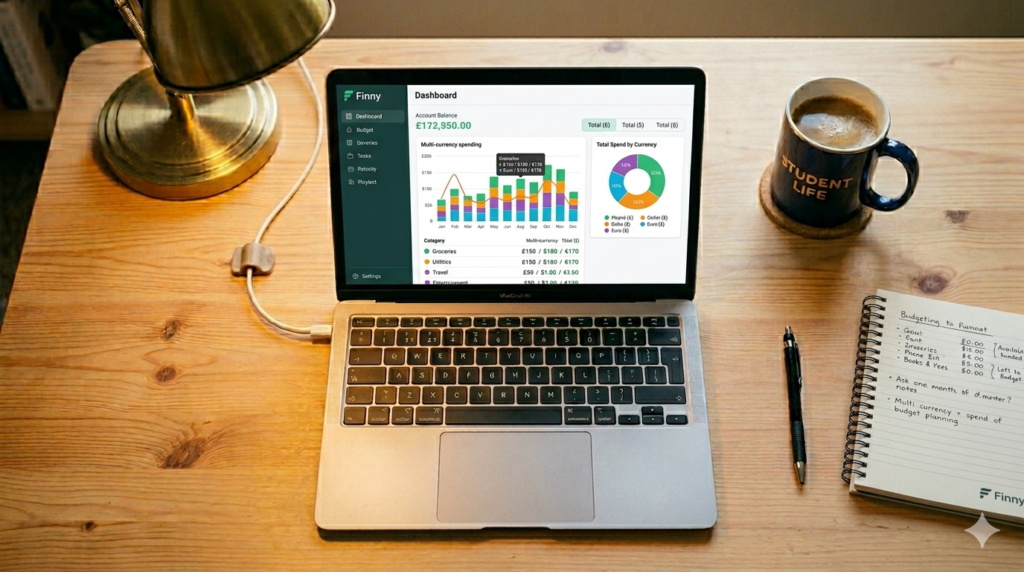
This one is less well known but genuinely strong for students, especially international students or anyone studying abroad.
Finny’s free tier includes unlimited manual transaction logging, custom categories, multi-currency support across 150+ currencies, and visual spending breakdowns. No trial period. No features hidden behind a paywall. It works offline too — which matters more than people expect when campus Wi-Fi is unreliable or you’re travelling.
The categories are fully customisable. You can create ones that actually match student life — Dining Hall, Textbooks, Campus Events — rather than being stuck with generic options designed for people with mortgages and car payments.
For international students especially, the multi-currency support alone makes it worth trying.
6. Best Free Budget Apps for Students 2026 — Which One First?
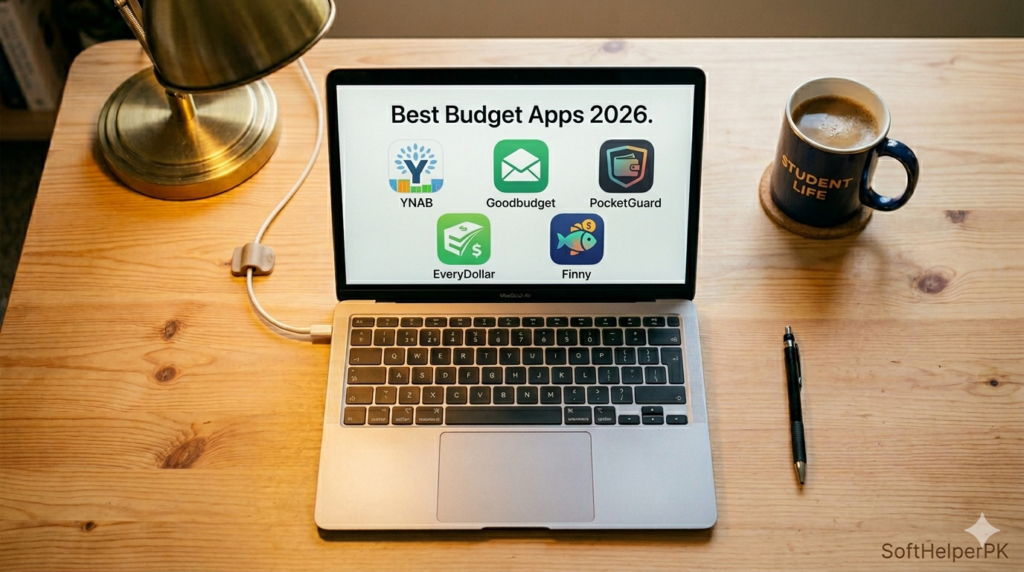
Depends on one thing — how much friction are you okay with?
If you want the most powerful option and you’re actually enrolled as a student — YNAB, free, no question. It takes 20-30 minutes to set up properly but the payoff is real.
If linking your bank makes you uncomfortable — Goodbudget. Manual entry, envelope system, no bank connection required.
If you want the simplest possible experience — PocketGuard. One number on the screen. Done.
If you’re just starting out and want something gentle — EveryDollar to build the habit, then move to YNAB later.
If you’re an international student or study abroad — Finny for the multi-currency support.
The best free budget apps for students in 2026 all solve the same basic problem — you don’t know where your money is going, and you need to. Any of these will fix that. The best one is the one you’ll actually open every week.
One practical tip — set a recurring reminder every Sunday evening to check your budget for 5 minutes. Doesn’t need to be longer than that. Just enough to stay aware. That weekly check-in is what separates people who use budgeting apps and benefit from them versus people who download them and forget they exist.
If you want to pair your budgeting with better study habits, check out my guide on the best free AI tools for students in 2026 — there are some brilliant free tools that save time on assignments and research too.
The best free budget apps for students 2026 all solve the same problem — you need to see where your money is going.